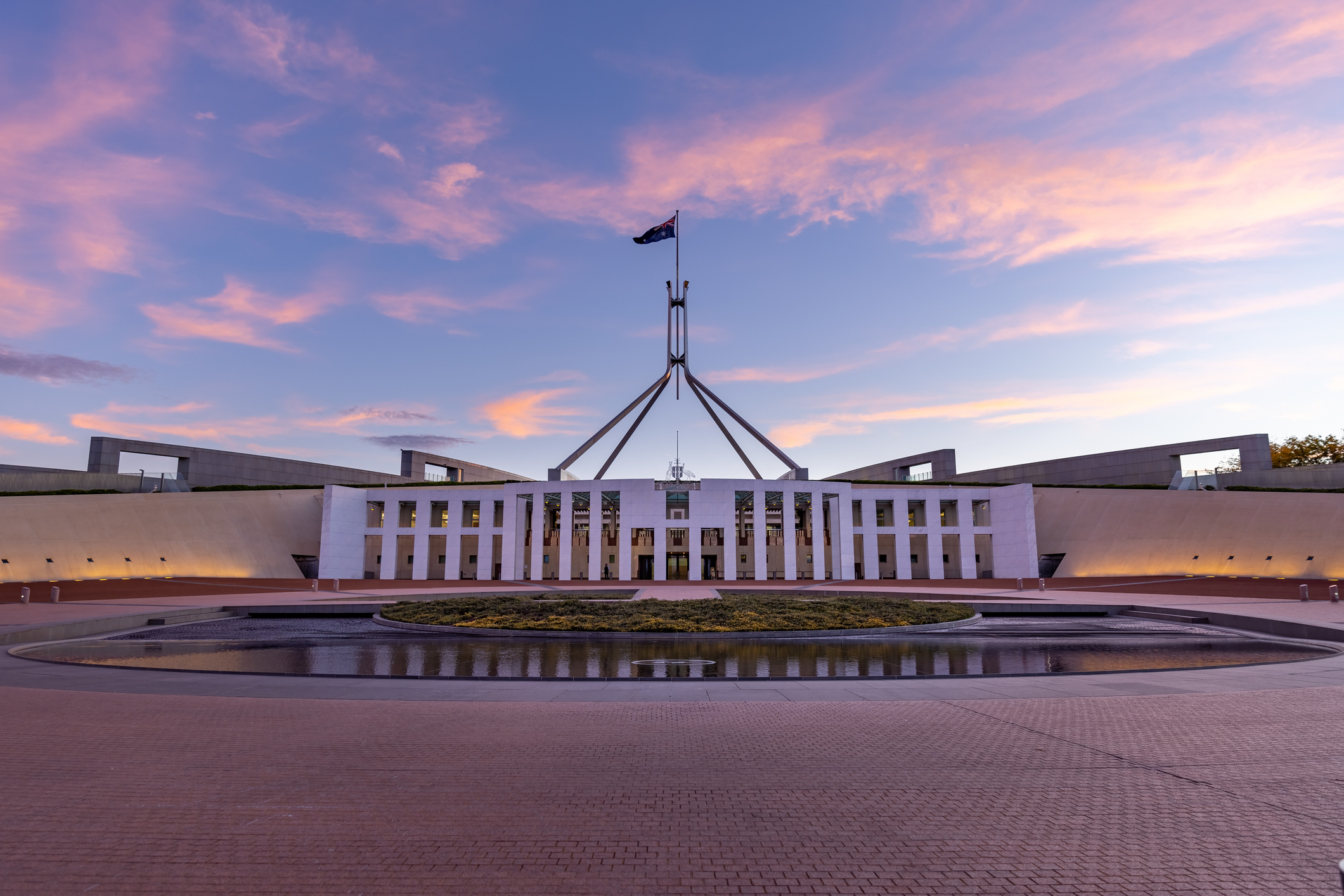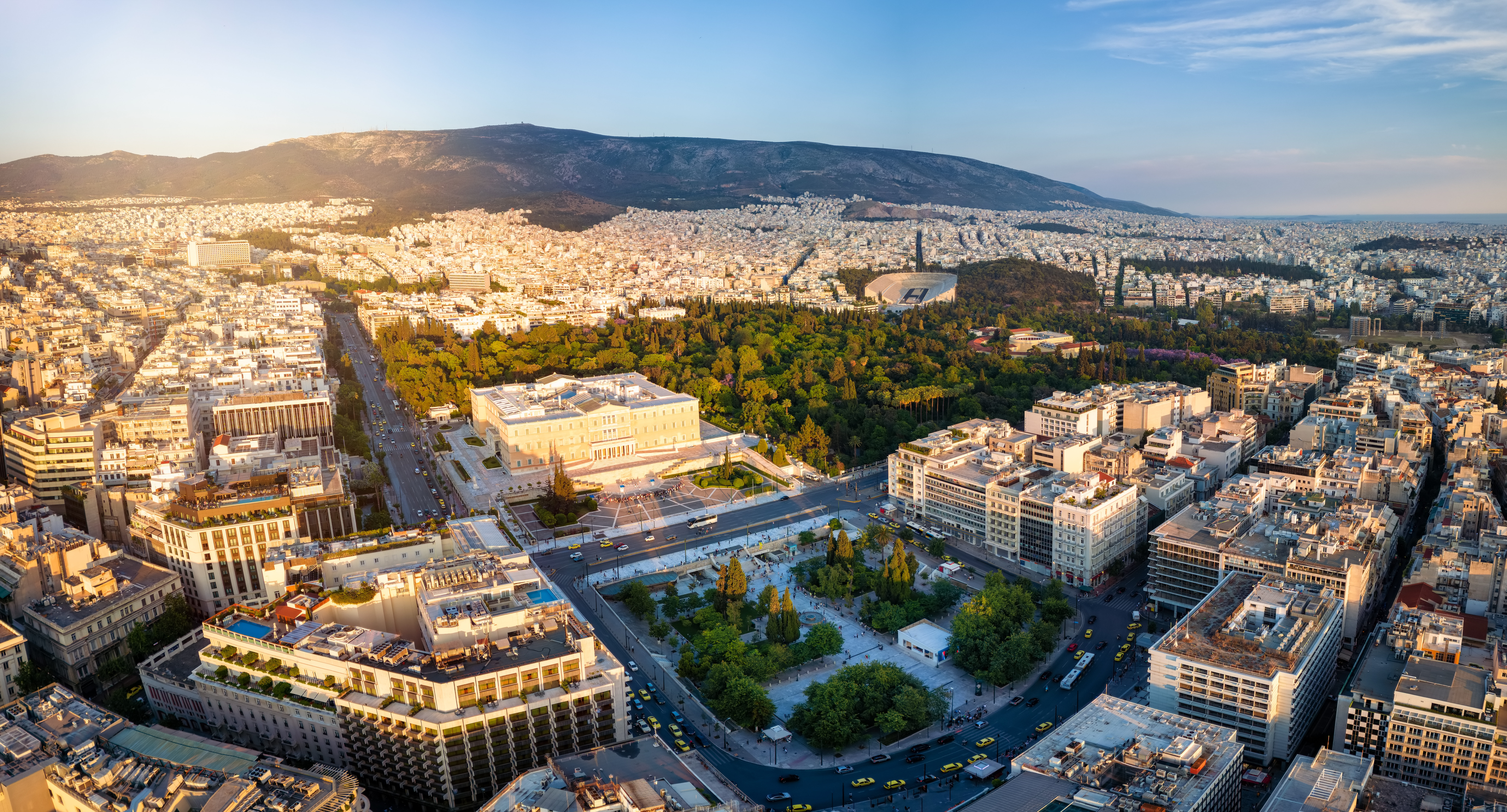

Monthly intelligence on the Canada–Greece political and economic corridor: what happened, and why it matters.
This Month at a Glance
- The centre of gravity this month is the invitation for Canada to become the first associate member of the EU. Since no one yet knows what the term will come to mean in practice, much of this issue is devoted to what we do know so far, and to what businesses and governments should be watching as the definition takes shape.
- The associate member: Von der Leyen has opened the door and Carney has welcomed the invitation, yet no such status currently exists in EU law. The Canada–EU Summit in Montreal on 29–30 October will likely give it its first shape.
- The CETA mirror: Ten member states, among them Greece, have still not ratified the trade agreement on which the new alliance would be built, a useful reminder of how demanding unanimity can be.
- The bilateral: Prime Ministers Carney and Mitsotakis met in New York on 23 September and discussed, among other things, Greece’s 2027 Presidency of the Council.
- Skouries delivers: First copper-gold concentrate was produced on 8 September, within the quarter this Update had flagged in its previous two issues.
- Developed, officially: Greece’s FTSE Russell upgrade took effect at the market open on 21 September, with MSCI’s parallel move to follow in May 2027.
Politics & Brussels
After the announcements in Strasbourg, attention now shifts to Montreal, where the two sides will attempt to give the new partnership its first concrete form.
THE ASSOCIATE MEMBER · CANADA AND THE EU · LEAD STORY
Brussels opens the door to a membership that has yet to be defined
On 16 September, for the first time in the history of the State of the European Union address, a foreign head of government was present in the Strasbourg chamber as the special guest. Midway through her speech, Ursula von der Leyen turned to him directly. “I would like to work with you on opening the door for Canada to be the first associate member of the EU,” she told Prime Minister Mark Carney, drawing a standing ovation, and she went on to frame the ambition as a move “from CETA to an alliance for the future.” Carney responded from the same podium the following day, telling the Parliament that Canada welcomes the ambition and citing polling that shows an overwhelming majority of Canadians support much closer ties with Europe. Speaking to reporters afterwards alongside European Parliament President Roberta Metsola, he added the caveats: Canada is not seeking full membership, the label is for Brussels to decide and any final structure will be put to debates and, ultimately, a vote in the Canadian Parliament. What matters, in his words, is the substance, and the substance he proposed from the chamber was concrete: deep cooperation across critical minerals, defence industrial capacity, AI and compute, energy security, space and payments, together with freer digital trade and youth mobility across the Atlantic.
There is, however, a complication that deserves emphasis. No such thing as an associate membership currently exists under EU law. The most plausible legal pathway is Article 217 of the Treaty on the Functioning of the EU, which authorises the Union to conclude association agreements with third countries; using it, though, would require unanimous approval by the 27 member states in Council as well as the consent of the European Parliament. The first real test of what this partnership will actually look like comes at the Canada–EU Summit in Montreal on 29 and 30 October.
Why it matters
It should be said plainly that no one yet knows what associate membership will entail, and this is precisely where the opportunity lies. The definition is being written now, in position papers and national capitals, ahead of the Canada–EU summit in Montreal. In our assessment there are three broad directions it could take: a rebranded association agreement under Article 217; a sectoral package assembled from building blocks that already exist, such as SAFE, critical minerals and the research and mobility programmes; or a political label that gradually stalls in national capitals, as ambitious announcements sometimes do. In the meantime, organisations that treat this period of ambiguity as an agenda-setting window, rather than waiting for the legal picture to settle, will have helped to write the roadmap that everyone else ends up reading.
THE CETA MIRROR
The lesson of CETA: nine years of provisional application, and counting
In order to appreciate how demanding that unanimity requirement can be, one need look no further than CETA itself. The Canada–EU trade agreement, signed in 2016, has applied provisionally since 21 September 2017, and most of its provisions operate on that basis. To date, seventeen member states have ratified it, while ten have not: Belgium, Bulgaria, Cyprus, France, Greece, Hungary, Ireland, Italy, Poland and Slovenia. Until they do, the agreement’s investment-protection provisions remain dormant. The paradox of the present moment belongs to Ireland, which was among the first capitals to explicitly endorse associate membership and yet cannot ratify CETA, because its own Supreme Court has ruled that ratification is incompatible with national law as it currently stands. Any agreement concluded under Article 217 would face the same arithmetic: twenty-seven capitals, each holding their own key to complete approval.
TRADE TALK WITH GEORGES RIGAS · EXCLUSIVE TO THE UPDATE
Is feta undermining trade between Canada and Greece?
The short answer is no: Greek agri-food and consumer exports to Canada have doubled since 2017, and total Greek exports to Canada have grown by around two-thirds in real terms. The longer answer is more interesting. Eight years into CETA’s provisional application, Greece has yet to ratify the agreement, primarily because of feta, since CETA grandfathered existing Canadian producers’ use of the name for certain cheeses, angering Greek producers. So what is being left on the table? Not much, in fact. Provisional application covers all areas of exclusive EU competence, meaning 98% of tariff lines are already in force between Canada and the EU; Greek exporters enjoy preferential zero tariffs on a wide range of products, and Commission implementation data confirm that they actively claim CETA preference, while Canadian exports to Greece have grown a more modest 18% over the same period.
Who loses from non-ratification, then? Because investment protection requires ratification by each member state, the agreement’s Investment Court System is not yet in force, which means cross-border investors operate in Greece without CETA’s specialised dispute-resolution mechanism, and some conservative Canadian investors may think twice as a result. Ironically, feta producers may also be at a disadvantage: for as long as Greece remains outside ratification, it has fewer tools with which to press for stronger protection of Greek geographical indications through CETA’s own institutions.
Georges Rigas is a research associate at the Institute for Research on Public Policy (IRPP) in Montreal, working on Canada’s trade diversification efforts.
Why it matters
For Greece, this file counts twice. On the one hand, Athens is one of the ten capitals whose ratification any deeper alliance would eventually require. On the other, Greece chairs the Council of the EU in the second half of 2027, which is exactly when a roadmap agreed in Montreal would be maturing into legal form. In other words, the corridor’s two governments hold considerably more of this file than the initial announcement suggested.
THE BILATERAL
The two Prime Ministers compared notes in New York
Meanwhile, the two governments are already talking. On 23 September, on the margins of the UN General Assembly in New York, Prime Ministers Mark Carney and Kyriakos Mitsotakis held a bilateral meeting. According to the Greek readout, the agenda covered closer Canada–EU cooperation on artificial intelligence, space and energy, as well as Greece’s Presidency of the Council of the EU in the second half of 2027. As noted above, that Presidency is likely to coincide with the legal maturing of whatever is agreed in Montreal, which makes the timing of this conversation, five weeks before the summit, worth registering.
Industry & Sectors
Beyond Brussels, the corridor’s flagship investment (Eldorado Gold) reached the milestone it had been building toward for years.
MINING · CRITICAL MINERALS
Skouries produces its first concentrate, on schedule
Eldorado Gold produced first copper-gold concentrate at Skouries on 8 September, reaching the milestone this Update flagged in June and again in August, and doing so within the quarter the company had projected. “This is a defining moment for Eldorado,” said CEO George Burns, who described Skouries as “one of the most significant investments in Greece and one of Europe’s largest copper-gold projects.” In addition, the ore stockpile now stands above 4.6 million tonnes, which is enough for more than seven months of processing; commercial production remains on track for the fourth quarter; and concentrate sales have been agreed for all 2026 volumes and part of 2027, on terms the company describes as significantly better than its feasibility study had assumed.
Why it matters
The corridor’s largest Canadian direct investment is now a producing mine, and it is worth noting that what it produces is copper, the very asset class Carney placed on the EU’s table in Strasbourg. What was until recently a construction story has therefore become part of the critical-minerals conversation between Canada and Europe, with a Greek address.
Capital & Markets
After a year of counting down, the upgrade has taken effect.
INDEX & RATINGS
Greece completes its return to developed-market status
Greece opened for trading on Monday 21 September as a Developed Market under FTSE Russell’s classification, completing a single-step promotion that had been a decade in the making; MSCI’s parallel upgrade will be implemented in May 2027. As it happens, the same date marked nine years since CETA entered provisional application, a coincidence that neatly captures how differently the corridor’s two flagship projects have moved.
Why it matters
With the reclassification complete, attention shifts to the reallocation itself. The first wave of passive flows arrives now, and the second will follow with MSCI in May.
WEALTH MIGRATION
The wealthy are moving to Greece, and now the money managers are too
Greece’s re-rating is increasingly a story of people and money as much as index weightings.. On 7 September, Bloomberg reported that Chris Rokos, founder of the roughly $22 billion macro fund Rokos Capital Management and the United Kingdom’s third-highest individual taxpayer last year at an estimated £330 million, is moving his tax residence to Greece and opening an Athens office for the firm, one that Greek officials courted for months and that could grow toward fifty people, according to the Financial Times. Rokos, who has Greek family roots, is the most prominent name in a broader flow. Henley & Partners estimates that around 1,200 millionaires relocated to Greece in 2025, bringing some $7.7 billion in private wealth, and its latest report ranks Greece among the world’s most competitive jurisdictions for internationally mobile wealth, a clear beneficiary as Spain and Portugal wound down their golden-visa routes. Knight Frank, for its part, counts Greece’s population of ultra-high-net-worth individuals up 74% since 2021 and places the country among the twenty fastest-growing such markets in the world. The policy machinery behind all this includes a flat €100,000 annual tax on foreign income for qualifying new residents, available for up to fifteen years, alongside a golden-visa programme that held more than 32,000 active investor permits as of May despite higher thresholds.
Why it matters
Wealth migration is a leading indicator: family offices, advisers and investment vehicles tend to follow the principals. For Canadian wealth managers, funds and service firms weighing a European base, Greece is now on the same shortlist as the traditional centres, and it arrived there in the same month its stock market returned to developed status. The jurisdiction and the index are being re-rated together.
The Balkan Update
A look beyond Greece: selected developments across Southeast Europe with corridor relevance. The Balkan Update is curated for Crestview by Lyubomir Metodiev, Legal and International Business Advisor, Sofia.
Two elections on one Sunday. Bulgaria and Serbia both go to the polls on 25 October, four days before the Canada–EU summit in Montreal, though for very different reasons.
The Bulgarian presidential race. Bulgaria elects its president and vice-president on a joint ticket, and the incumbent enters the race in the strongest position. President Iliana Iotova, who has served as head of state since January, when she succeeded Rumen Radev following the resignation that ultimately made him Prime Minister, is running together with BTA Director General Kiril Valchev. Her clearest challenger is Andrey Gyurov, the former deputy governor of the central bank whom she herself appointed caretaker Prime Minister in February, and who is now running with Georgi Kandev on a pro-euro platform. The deeper question, however, is institutional: will voters use the presidency to reinforce the governing centre and hand Radev additional leverage, or will they prefer to build a counterweight?
The Serbian parliamentary race. In a development that reshapes the race, Aleksandar Vučić resigned as president on 27 September, with parliamentary speaker Ana Brnabić serving as acting head of state until a successor is elected; a separate presidential election must follow within ninety days of the resignation’s formal submission. The parliamentary election remains set for 25 October, and Vučić, barred from a third presidential term, is seeking a return to the premiership, though that depends on the parliamentary outcome and the government formation that follows rather than on his resignation alone. Serbia is therefore conducting its campaign under an acting head of state, with Vučić’s SNS-led bloc facing the student-backed “Students Win” list headed by Ilija Srdanović, alongside the pro-European “European Serbia” list and a Socialist-led list.
Ahead of the 25 October votes, the Balkan Update will publish a short curated polling brief that separates vote intention from scenario modelling, so that headline percentages can be read for what they actually are.
Romania approaches its confidence vote. On 28 September, the Social Democrats’ leadership decided not to support prime minister-designate Siegfried Mureșan’s proposed government, leaving his minority coalition of roughly 170 seats well short of the 233 votes the investiture requires; the joint confidence vote is scheduled for 30 September. Until investiture, the proposed cabinet and its economic programme remain proposals rather than an installed administration and enacted policy. For businesses following Romanian energy, transport and public investment, the immediate question is therefore which government will obtain the authority to implement a programme, not whether every individual commitment will become law.
Corridor VIII advances on the ground. North Macedonia’s EU accession path remains politically blocked; its physical integration with the Union, however, continues to advance. Bulgaria and North Macedonia held the inaugural meeting of the joint committee for their cross-border rail tunnel in Sofia on 30 July, while roughly €560 million in EU-backed financing supports the final Kriva Palanka–border section and the electrification of the line behind it.
Why it matters
By the time Canada and the EU sit down in Montreal, By the time Canada and the EU sit down in Montreal, Bulgaria will have cast its first-round presidential votes, with a runoff to follow on 1 November, Serbia will know its next parliament, and Romania may finally have a government. This will set the tone for the region well beyond this election cycle: how much power sits in one set of hands, how far each country leans toward a Brussels that is now also Canada’s partner and how ready the region is when enlargement moves from talk to treaty.
From The Embassy of Canada
Canadian cinema in the Cyclades. The Embassy supported the presentation of Canadian films at this year’s ANIMASYROS International Animation Festival, as part of a tribute to Canadian artist and sound designer Olivier Calvert. It was an outstanding edition, and one that brought Canadian culture, creativity and filmmaking to the heart of the Cyclades.
Canadian voices at the Athens Democracy Forum. A large Canadian delegation, led by Nicole MacIntyre, Editor-in-Chief of the Toronto Star, is taking part in this year’s Athens Democracy Forum.
Jumbo crosses the Atlantic. More details have emerged on Greek retailer Jumbo’s entry into Canada. The first store will open at Vaughan Mills, just outside Toronto, in the space formerly occupied by Toys “R” Us, under a franchise agreement with Fox Group, and the company is guiding toward an opening around the end of the year, with five to ten Canadian stores planned within the first three years of operation.
A Greek delegation in Toronto. Looking ahead, the Embassy is preparing for the Delphi Economic Forum Toronto on 19 October, which will bring a high-level Greek delegation to Canada, along with plenty of food for thought on Greece, Canada and where the economy is headed.
Alain Lefèvre returns to Athens. The Embassy is delighted to share that the acclaimed Canadian pianist and composer will perform at the Megaron, the Athens Concert Hall, on 1 November, joining conductor Carl St-Clair and the Athens State Orchestra for an evening of Gershwin. His connection with Greece began in 1997, when he first performed in Thessaloniki as part of Canada’s contribution to the city’s European Capital of Culture programme, and the bond has continued through his work ever since, including his acclaimed recording Philotimo, filmed entirely on the island of Tinos.
What we are watching
- Canada–EU Summit, Montreal (29–30 October): the roadmap that gives “associate member” its first working definition.
- Two Balkan ballots (25 October): Bulgaria’s presidency and Serbia’s parliament, with our curated polling brief ahead of the vote (coming soon).
- Skouries commercial production (Q4): the ramp from first concentrate to commercial declaration.
- CETA movement: whether Montreal prompts any of the ten pending capitals, Athens included, to revisit ratification.
- Kozloduy Unit 7 FID (H2 2026): the investment decision on the AP1000 build, with its Canadian Owner’s Engineer consortium.
- Canada’s Eurovision machinery: CBC/Radio-Canada’s selection process ahead of the Burgas debut in May 2027.
A note on sources: items in this Update are drawn from government readouts, EU and NATO institutional releases, company filings and disclosures, and official statistics. Where a figure reflects press reporting or stated intentions rather than formal disclosure, we say so. The interpretation in the “why it matters” notes is Crestview’s own.
The Canada–Greece Update is prepared by Crestview Strategy’s Athens practice, which advises clients on public affairs and government relations across the corridor. It is provided for general information purposes and does not constitute legal, financial, or investment advice.
ATHENS · OTTAWA · NEXT ISSUE: OCTOBER 2026