
Diplomacy and Strategy
What we are tracking
World leaders convened in New York this week for the UN General Assembly’s High-Level Week, which opened on September 22 under the theme “Restoring trust, managing transformation: a United Nations that delivers for all.” Roughly 130 heads of state and government are attending. President Trump addressed the assembly and met Gulf Cooperation Council leaders from the UAE, Saudi Arabia, Qatar, Kuwait, Bahrain, and Oman to discuss postwar strategy. He said “Iran wants a deal,” although no formal meeting has been announced with Iranian President Masoud Pezeshkian, who is attending under US restrictions on his movement and purchases. The UN Security Council added a standalone high-level session on artificial intelligence for Wednesday after researchers warned that the technology could escape human control. Trump dismissed the concern as “a hoax” and described US leadership in artificial intelligence as a race against China. The week also marks Secretary-General António Guterres’ final General Assembly before his term ends on December 31. No successor has been identified, while 193 member states consider a Security Council reform package. Writing in Foreign Affairs, Mark Leonard argued that the US-led, rules-based international order has not transitioned to a successor system but has collapsed into a prolonged “un-order.” He attributed this to fragmentation, contagion, and “strangulation”: the weaponisation of supply chains, financial systems, and physical chokepoints. Leonard cited Iran’s closure of Hormuz, which he said halted roughly 20 percent of global oil and LNG shipping, as a direct example.
Why it matters
This year’s UN agenda reflects the main pressures reshaping Gulf strategy: a war disrupting a fifth of global energy shipping, sanctions-evasion routes under strain, and Gulf states seeking security support from several partners. Leonard’s concept of “strangulation” describes the use of trade routes, financial systems, and physical chokepoints as sources of leverage. His argument that middle powers should reduce their dependence on US security guarantees and pursue bilateral arrangements mirrors steps already being taken by Riyadh, Doha, and Abu Dhabi.
What to watch
Whether Trump’s meeting with GCC leaders produces concrete postwar commitments, whether informal contact with Pezeshkian’s delegation leads to a formal meeting, how the Security Council’s artificial intelligence session and reform debate develop, and whether Guterres uses his final General Assembly to address the “un-order” Leonard describes.
Regional Security
What we are tracking
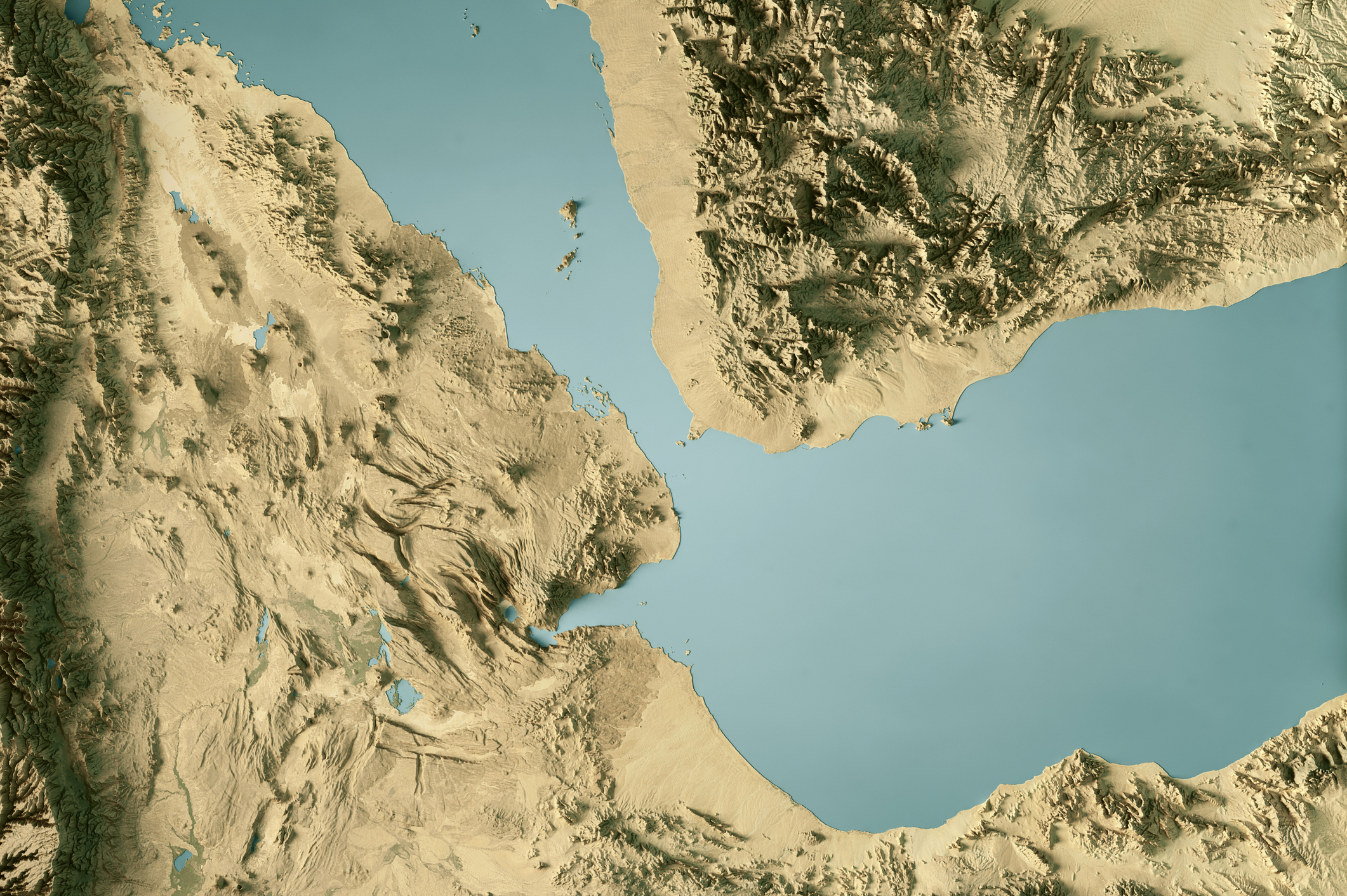
The UK is close to providing Saudi Arabia with direct military support against Houthi attacks, Bloomberg reported on September 21. Prime Minister Andy Burnham announced the move while travelling to the UN General Assembly in New York. “We have received a request from the Kingdom of Saudi Arabia for military support, and on the advice of the defence secretary and the foreign secretary, last night I agreed to that request for defensive air-to-air refuelling,” Burnham said. The Royal Air Force will use one RAF Voyager tanker to refuel Saudi aircraft flying what officials described as defensive missions. Operations are expected to begin within days, and the arrangement will run for several weeks, subject to review. The decision follows an escalation in Houthi attacks on Saudi Arabia, including an intercepted missile strike on Riyadh on September 19. Earlier in the month, Houthi forces seized the port city of Mokha and several Red Sea islands and declared a blockade on Saudi shipping through the Bab el-Mandeb Strait, which carries roughly 12 percent of global trade. Saudi Arabia has separately requested air-defence support from France, Pakistan, and Egypt. The US has so far shown no appetite for direct military involvement.
Why it matters
The UK’s decision to step in while Washington holds back marks a shift in how Saudi Arabia’s allies are sharing responsibility for its defence. It also shows that the Houthi threat to the Bab el-Mandeb corridor, which carries a significant share of global trade, is increasingly viewed as a shared Western interest rather than a US responsibility alone. Riyadh’s requests to France, Pakistan, and Egypt also suggest it is seeking support from several countries rather than relying on a single ally.
What to watch
Whether Houthi attacks on Saudi territory continue despite the added air support; and whether Washington’s posture shifts if the threat to Bab el-Mandeb trade volumes grows. Whether the RAF refuelling support expands beyond one tanker or a few weeks; whether France, Pakistan or Egypt follow the UK in committing direct support.
Capital and Investment
What we are tracking
Capital converged on the Gulf from three directions this week. The Wall Street Journal reported on September 21 that the Trump administration has proposed a $5 billion fund called PACT to help rebuild Gulf energy sites damaged in the war, to be matched dollar for dollar by eight Gulf and regional partners, Saudi Arabia, the UAE, Qatar, Bahrain, Kuwait, Oman, Iraq and Jordan, for a combined $10 billion, managed by the US Development Finance Corporation. Qatar deployed sovereign capital on two fronts within a single day: on September 20, Qatar Investment Authority unveiled Doha Investment, a new domestic platform expected to back roughly $38.5 billion in local infrastructure projects over five years, and on September 21 QIA struck a separate $20 billion partnership with J.P. Morgan Asset Management, split between a $15 billion public equities mandate and $5 billion in private markets financing for US middle-market companies. Rounding out the week’s capital moves, Hasma Capital Advisors, the family office managing a multibillion-dollar portfolio for members of Saudi Arabia’s Juffali dynasty, is relocating most of its staff from London to Dubai and is likely to close its UK branch by mid-2027, Bloomberg reported on September 18, with chief executive Mamoun Askari among the staff already listed as UAE residents.
Why it matters
Three different kinds of capital, multilateral reconstruction financing, sovereign investment, and private wealth, moved toward or through the Gulf in the same week, each for a different reason: Washington’s judgment that the region’s energy infrastructure is now a shared strategic asset worth underwriting, Qatar’s confidence in funding a domestic build-out and an international expansion at the same time, and Dubai’s tax advantage over London. Together they suggest capital is treating the war as a backdrop to route around rather than a reason to stay away, even as some Gulf officials warn that rebuilding energy sites before a ceasefire risks renewed attack.
What to watch
Whether Saudi Arabia, the UAE and PACT’s other six named partners confirm their matching contributions; how quickly Doha Investment and the JPMorgan partnership move from announcement to committed capital; and whether Hasma closes its UK branch on schedule and other family offices follow.
Energy Markets
What we are tracking
Crude oil has risen above $100 a barrel this month, while fuel protests have broken out from Syria to Guatemala, the Financial Times reported in a Big Read on September 19. A brief US-Iran truce that reopened the Strait of Hormuz in June has collapsed, and inflationary pressure is building across the US, EU, and UK. The US Federal Reserve raised interest rates for the first time since 2023, the European Central Bank raised rates for the second time since the war began, and the Bank of Japan took its rate to a 31-year high. Neil Shearing of Capital Economics warned that crude prices sustained at $110 to $120 a barrel for six months would slow global growth to around 2 percent, down from 3.5 percent last year. Fuel markets face greater pressure than crude. Diesel prices in the US and Europe have passed $200 a barrel, while US pump prices have exceeded $6 a gallon for the first time. Refinery output in China and Russia has fallen, and Middle East diesel exports have dropped to a quarter of prewar levels, according to the International Energy Agency. The IEA said 94 countries are now subsidising or capping fuel prices to protect consumers. The IMF has cut growth forecasts for oil importers including Zambia, Morocco, Egypt, and Tunisia, while raising them for exporters such as Nigeria, Angola, and Algeria.
Why it matters
The shock differs from the oil crises of the 1970s. Production is now less concentrated in the Middle East, and oil’s share of global energy demand has fallen from 46 percent to under 30 percent. This helps explain why the global economy has absorbed the disruption better than many economists expected. However, the countries with the least fiscal capacity are facing the greatest strain. The immediate constraint is also in fuel markets, where limited refining capacity, rather than crude supply, is driving pressure ahead of winter.
What to watch
Whether crude remains at $110 to $120 a barrel long enough to trigger the slowdown forecast by Capital Economics, whether China reimposes its fuel export ban and further tightens the diesel market, and whether fuel subsidies remain affordable for the 94 countries now relying on them.
Gulf Logistics
What we are tracking
Container traffic through the Strait of Hormuz has collapsed even as oil tankers continue to move under US escort, the Financial Times reported on September 20. Only 240 container ships transited the Gulf between March 1 and September 7, down 94 percent from 4,198 a year earlier, according to maritime analyst Xeneta. Just 11 of the 99 container services operating in the Gulf before the war remain active. Commodity flows have also fallen. Limestone shipments through the strait dropped from 2.93 million tonnes in January to zero in August, while volumes of sulphur, nitrogen fertiliser, and corn each fell by roughly two-thirds or more, according to Kpler. Jebel Ali, Dubai’s flagship port and normally the world’s ninth-busiest, has effectively been cut off from the sea. Traffic has shifted to the much smaller Khor Fakkan, which has six berths compared with Jebel Ali’s 27. Oman’s ports outside the strait have absorbed some of the overflow, with cargo volumes up 69 percent and transit truck traffic nearly tripling to 116,088 so far this year. Hapag-Lloyd said its overland “land bridge” adds seven to ten days and costs the company an extra $50 million a week. DHL Global Forwarding estimated that replacing a single ship carrying 20,000 containers would require 4,000 flights. DP World is building two new terminals at Fujairah, outside the strait, but they will take about two years to complete.
Why it matters
Nine months into the war, Gulf shipping has reached a costly new equilibrium with little sign of recovery. Businesses have found alternatives, but they cost three to four times more, and lead times for goods from China can still reach two months. Jason Tuvey of Capital Economics said the fiscal strain is greatest in Qatar, Kuwait, and Bahrain, where revenues have taken a direct hit. Even the UAE has kept fuel prices steady at a cost to the state.
What to watch
Whether container volumes recover before DP World’s new Fujairah terminals open in roughly two years, whether Oman’s port boom lasts after Hormuz reopens, and whether Gulf retailers face further shortages as land and air routes struggle to absorb the volumes previously carried by container ships.
Trade Routes
What we are tracking
Iran is redirecting a growing share of its trade overland to bypass the US naval blockade of the Strait of Hormuz, the Financial Times reported on September 18. Turkey’s Gürbulak crossing beneath Mount Ararat is now handling a seven-kilometre queue of trucks around the clock. Before the war, more than 80 percent of Iran’s roughly 180 million tonnes of annual two-way trade moved by sea from its southern coast. Bilateral trade with Turkey rose 19 percent to $3.2 billion in the first half of the year, while imports through Gürbulak increased 250 percent in the five months to August 12, according to Turkish and Iranian customs data. About 500 trucks now cross from Turkey into Iran each day, with freight traffic up roughly 30 percent year on year. However, waits at poorly equipped crossings can stretch to three weeks or more. Iraq also briefly closed two border crossings this month after drone attacks on Saudi Arabia’s East-West pipeline originated from Iraqi territory. Majid Reza Hariri of the Iran-China Chamber of Commerce estimated that moving trade with China overland rather than by sea would cost Iran an additional $18 billion a year. Despite the shift, Iran’s non-oil exports fell 28 percent to $15 billion and imports fell 26 percent to $17 billion in the five months to August 22. The US has also sanctioned 27 Iranian airlines and three Turkish logistics firms accused of helping Tehran move weapons and cargo.
Why it matters
Overland routes are keeping some trade moving, but cannot replace the maritime capacity Iran has lost. Volumes are rising sharply from a low base, while total non-oil trade continues to shrink. Rerouting is also adding billions to Iran’s import bill at a time of 90 percent inflation. Turkey’s role as Iran’s main overland outlet is attracting greater scrutiny from Washington, reflected in this month’s sanctions on Turkish aviation and logistics firms and Ankara’s regulatory action against a bank accused of Iran-linked transactions.
What to watch
Whether Iraq keeps its border crossings open as attacks on Saudi pipeline infrastructure continue, whether Turkey faces further US pressure over its role in Iranian trade, and whether Iran’s non-oil trade losses deepen or stabilise as the land routes develop.
Related articles
- U.N. General Assembly to Confront Familiar Crises, New Conflicts and A.I.
- The Abandoned Order
- UK to Give Saudi Arabia Defensive Support to Counter Houthis
- U.S. Proposes $5 Billion to Kickstart Fund to Rebuild Gulf Energy Sites
- Qatar Reshapes Its Wealth Fund Strategy With New Local Platform
- JPMorgan, Qatar’s QIA Target $20 Billion Investment Partnership
- Saudi Arabia Billionaires’ Family Office Dubai Bet Adds to London Exodus
- Five Ways the Iran Energy Shock Is Wrongfooting the World
- The Gulf Cargo Trade That Vanished
- Iran Activates Land Routes to Bypass US Blockade