
Regional Security
What we are tracking
Riyadh’s financial district was targeted on November 19, when a Houthi projectile struck the capital’s tallest tower, damaging multiple floors of the building that houses Saudi Arabia’s sovereign wealth fund. It was the second strike on the district in under two weeks, and Saudi civil defence called it “a flagrant violation of international law.” Expatriates have begun leaving Riyadh as Houthi strikes persist, a reversal from the war’s early months, when the capital saw far fewer direct attacks than other Gulf cities and its open airspace made it a key exit route for people leaving Bahrain, Kuwait, Qatar and the UAE. Saudi Arabia has asked allies from the US to Asia for help restocking missile defences, as supplies across the Gulf have fallen sharply after months of conflict with Iran and near-daily Houthi attacks.
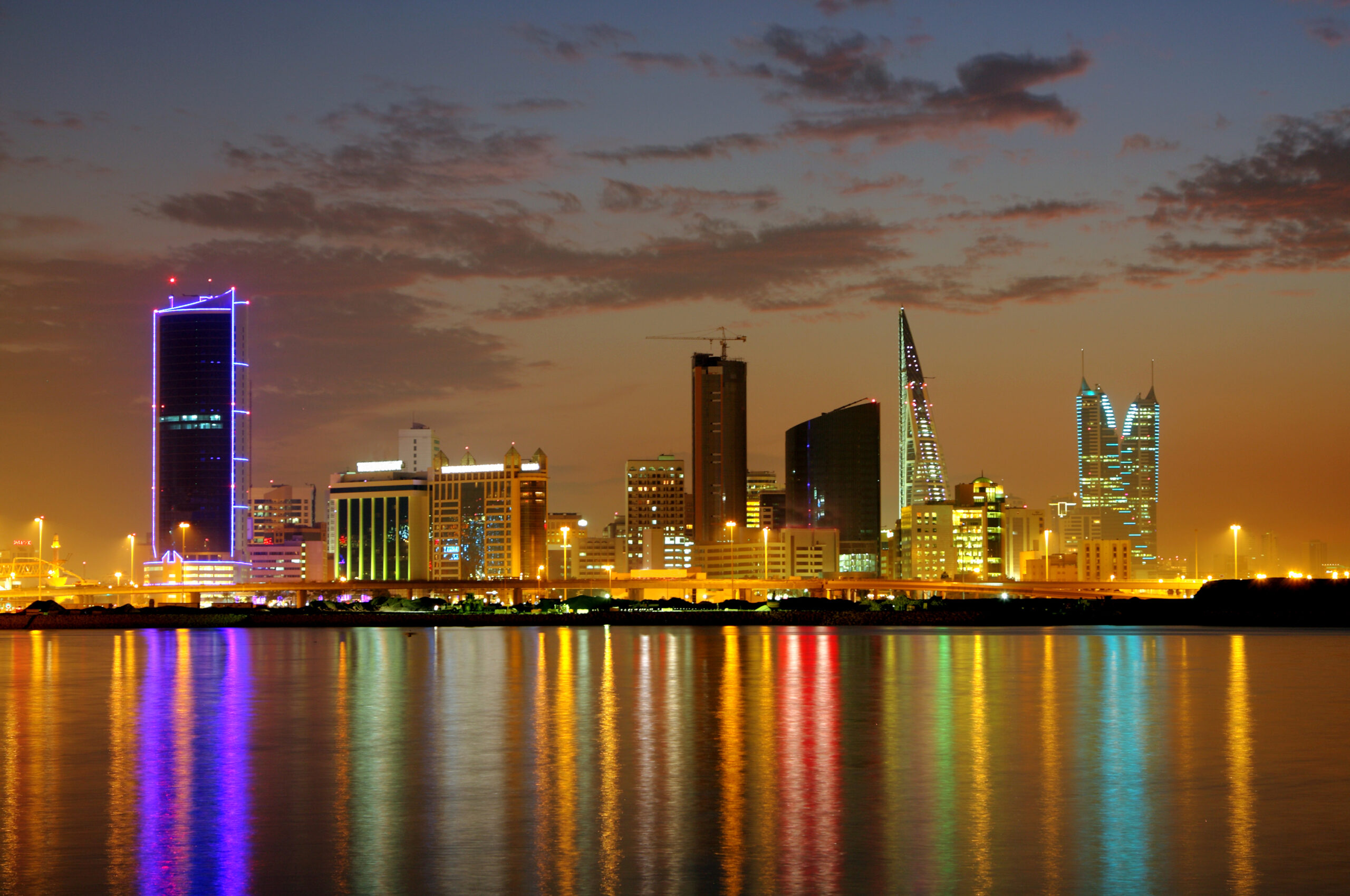
Elsewhere in the Gulf, Iran has struck Kuwait and Bahrain directly after setting a natural gas tanker ablaze in the Strait of Hormuz, taking a harder line in negotiations, Mideast officials say, since the midterms gave Democrats control of both chambers of Congress amid voter disapproval of the war. Bahrain, which hosts the US Fifth Fleet, has absorbed repeated missile and drone strikes on industrial sites and largely evacuated American military facilities, compounding an already slumping economy. Separately, US officials are investigating Iran as a possible source of new cyberattacks against as many as 50 ships carrying oil and other hazardous cargo, a parallel front that doesn’t involve a single missile.
Why it matters
The pattern of attacks on Riyadh’s financial district suggests the kingdom’s air defences are being worn down rather than simply tested, and the request for allied help restocking interceptors points to real pressure on its own supplies. Iran’s direct strikes on Kuwait and Bahrain demonstrate its willingness to target Gulf states with less capacity to absorb the damage. The suspected cyberattacks on shipping raise the prospect of a separate front that doesn’t depend on missile defences at all.
What to watch
Whether allies replenish Saudi Arabia’s missile defences, and how quickly; whether Iran broadens direct strikes beyond Kuwait and Bahrain; whether the suspected cyberattacks on shipping are confirmed as Iranian; and whether expatriate departures from Riyadh continue.
Canada and the Gulf
What we are tracking
Canada and Qatar were set to sign a foreign investment promotion and protection agreement on Tuesday, a step toward unlocking investment Qatar had committed to earlier this year. Prime Minister Mark Carney and Qatari Prime Minister Sheikh Mohammed bin Abdulrahman Al Thani were expected to sign the deal during the countries’ first strategic dialogue. Finance Minister François-Philippe Champagne, in Doha ahead of the signing, called it “one additional level of providing stability and predictability in our relationship.” The deal is narrower than the Comprehensive Economic Partnership Agreement Canada signed with the UAE in July, which will cut or eliminate tariffs on over 99% of current Canadian exports to the UAE and saw the UAE commit up to $50 billion in investment in Canada. Qatar has not put a figure on its own pledge, and Champagne acknowledged any investment would take time to materialize, noting the region takes a long-term view. He was also due to meet the Qatar Investment Authority, Qatar’s $580 billion sovereign wealth fund.
Champagne’s trip continued in Abu Dhabi on November 24, where Sheikh Abdullah bin Zayed Al Nahyan, the UAE’s deputy prime minister and foreign minister, received him for talks on deepening cooperation under the CEPA.
Qatar’s sovereign wealth fund was active on a separate front this week. The Qatar Investment Authority signed an agreement with Brookfield on November 20 targeting up to €15 billion in German defence sector investment.
Why it matters
The Qatar pact and the UAE meetings continue a deliberate push by Ottawa to diversify its trading relationships, as Carney has said plainly that Canada can no longer rely on the United States. Champagne’s comment that Gulf investors are seeking safe places for their money amid regional conflict and Hormuz disruption suggests Canada is positioning itself as a stable destination for capital leaving a wartime region, even as neither Gulf partner has yet attached hard figures to its investment pledges.
What to watch
Whether the Canada-Qatar pact is signed as planned and whether Qatar follows with a concrete investment figure, and what sectors the UAE talks prioritize next.
Capital and Investment
What we are tracking
Anthropic’s IPO delivered a record windfall to its Gulf backers, valuing the company at about $1.5 trillion. Gulf investors, led by Mubadala-linked entities and the Qatar Investment Authority, have committed an estimated $8.15 billion to Anthropic since 2024, according to research group Global SWF. Some of the earliest stakes came through FTX’s bankruptcy estate in 2024. Damac chairman Hussain Sajwani, whose firm remains a shareholder, put the scale of the return plainly: “What I have made in 30 years, I made in Anthropic in less than two years.” The Gulf funds join Amazon and Google among the biggest winners from the listing, the New York Times reported.
The returns come as Washington keeps a close eye on Gulf access to the chips that power that AI boom. As Saudi Arabia and the UAE build their post-oil economic strategies around AI, advanced US chips are arriving at data centres operated by partners with extensive ties to China. Foreign Policy identified the potential rerouting of US chips to China and Chinese companies renting access to American computing power through third countries as security concerns, noting that even after the Nvidia-Jensen Huang export controls scandal, new US rules still leave “significant loopholes.”
Why it matters
Gulf sovereign funds are now among the biggest financial winners from the US AI boom, just as Washington debates how much access Gulf states should have to the chips behind it. A bigger financial stake in Anthropic’s success gives Gulf investors more leverage in that debate, making them a harder client to restrict.
What to watch
Whether Gulf backers put their Anthropic gains toward further AI investment, whether Washington revisits chip export rules for Saudi Arabia and the UAE, and whether other Gulf funds disclose Anthropic stakes not yet named.
Global Trade
What we are tracking
Traffic through the Strait of Hormuz is thinning as Iranian attacks on shipping continue. Vessel crossings fell to 263 ships in the week to November 18, down 15% from the week before, as tanker transits dropped from 52 to 37 and oil flows nearly halved, the Financial Times reported, citing Kpler data. UBS strategist Giovanni Staunovo called the recovery in Middle Eastern exports “increasingly fragile.” Iran’s list of “non-compliant” vessels has grown to 240, up from 46 in August, and war-risk insurance to cross the strait has jumped from $54,000 to $64 million per tanker, the acting US Navy secretary said.
The UAE has built a workaround. Its shuttle service, with US military help, moves oil past Iranian threats and started as a way to protect its own exports; it has since expanded into a lifeline for other producers too, the Wall Street Journal reported, calling it crucial to breaking Iran’s grip on the waterway. ADNOC is also buying discounted Iraqi crude and reselling it to buyers outside the strait.
Why it matters
The strait is emptying out just as the UAE positions itself as the way around it. If Iran’s attacks continue at this pace, a shortage of willing vessels, not oil in the ground, becomes the real constraint on Gulf exports, leaving Abu Dhabi in control of one of the few routes still able to move crude at all.
What to watch
Whether Iran’s attacks on shipping continue at their current pace, whether the UAE’s shuttle service expands to more third-party cargo, and whether insurance costs climb further.
Mergers and Acquisitions
What we are tracking
International Resources Holdings, an Abu Dhabi mining firm controlled by a member of the Emirati royal family, agreed terms on November 23 for a potential £353 million ($464 million) acquisition of Irish titanium miner Kenmare Resources.
Why it matters
The deal fits a pattern running through this week’s news, Gulf capital diversifying into sectors and geographies well beyond oil, including critical minerals that feed defence, electronics and green technology supply chains the West is trying to secure outside China.
What to watch
Whether the Kenmare deal is finalized on the agreed terms, and whether IRH pursues further critical-minerals acquisitions.
Related articles
- The Gulf’s “New Normal” (Financial Times)
- Houthi Attack Damages Saudi Capital’s Tallest Tower (The Wall Street Journal)
- Houthi Attack Damages Headquarters of Saudi Sovereign Wealth Fund (The New York Times)
- Expats leave Riyadh as Houthi strikes persist (Semafor)
- Saudi Arabia asks allies from America to Asia for help restocking missile defenses (Semafor)
- Houthi air strike hits Saudi sovereign wealth fund headquarters (Financial Times)
- Tiny Bahrain Is Paying a Big Price for Its Ties to the U.S. (The Wall Street Journal)
- Iran Attacks Kuwait and Bahrain, Further Escalating Fight Over Strait (The Wall Street Journal)
- U.S. Eyes Iran as Possible Culprit in Dozens of New Cyberattacks Against Ships (The Wall Street Journal)
- Exclusive – Canada and Qatar to sign investment pact on Tuesday, source says (Reuters)
- Champagne to visit Gulf states as Ottawa seeks expansion of trade ties (The Globe and Mail)
- QIA, Brookfield Target Investing €15 Billion for German Defense (Bloomberg)
- Abdullah bin Zayed receives Canada’s Minister of Finance and National Revenue (WAM)
- Anthropic’s record IPO delivers Gulf windfall (AGBI)
- Anthropic IPO delivers huge paper gains to Gulf investors (AGBI)
- The irony in Anthropic’s huge payday to Gulf backers (Semafor)
- Anthropic’s Value Surges After Multibillion-Dollar I.P.O. (The New York Times)
- The Gulf Is America’s Next AI Security Test (Foreign Policy)
- The U.A.E. Is Shuttling Oil Past Iran in Risky Hormuz Operation (The Wall Street Journal)
- Oil shipped through Hormuz falls as Iranian strikes increase (Financial Times)
- Abu Dhabi’s IRH Outlines $464 Million Titanium Deal (Bloomberg)
- IHC unit agrees deal to take over Irish miner Kenmare (AGBI)