
Regional Security
What we are tracking
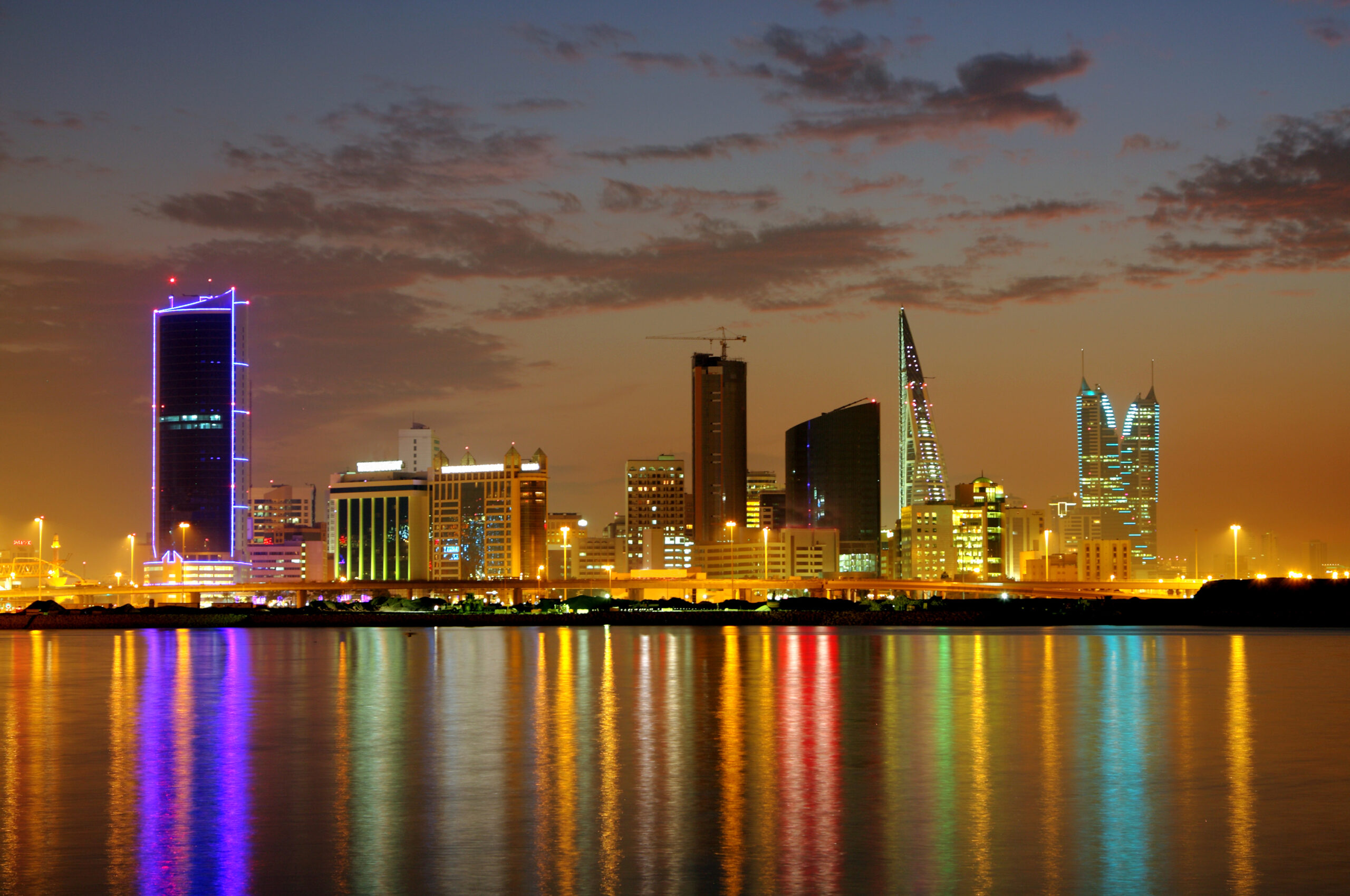
Iran has resumed attacks on Bahrain after a two-month lull. On November 13 it fired two drones at a radar facility, which U.S. forces shot down, and on November 15, Bahrain said it had intercepted several more Iranian aerial attacks, issuing its first public threat alert since September, the Financial Times reported. The IRGC said it used six drones against a U.S. air-defence radar at Riffa air base, and called the earlier attack retaliation for a U.S. strike on a telecommunications tower in Iran, the New York Times reported. Days earlier, Iranian state media said Tehran had hit Oman’s Didamar island, which aids navigation through Hormuz. Diplomacy has stalled. President Trump directed Vice President JD Vance to end his outreach to Tehran and posted that “we don’t need a deal with Iran,” while keeping the blockade and sanctions in place. U.S. intelligence assesses, with low confidence, that Iran still has 1,500 to 2,500 missiles, the Wall Street Journal reported, and Gulf allies have told Washington they do not want a return to war. The threat is also moving beyond the region. Iranian hackers are the main suspects in cyberattacks that breached U.S. water systems and overheated grocery store refrigerators across Europe, and Treasury Secretary Scott Bessent was moved to a military base after threats linked to Iran. A third U.S. carrier strike group, led by the USS Theodore Roosevelt, arrived in the region on November 16.
Why it matters
Iran is testing how far it can push without triggering full-scale strikes, and Bahrain, home to the U.S. Navy’s Fifth Fleet, is the obvious place to send that signal. With Washington content to hold the line through the blockade, the Gulf faces a long, low-level conflict in which Iran keeps enough missiles, drones and cyber capability to raise costs at a time of its choosing. That makes the resilience of infrastructure, not only air defence, the region’s priority.
What to watch
Whether Iran extends attacks to other Gulf states hosting U.S. forces, whether the third carrier signals preparation for strikes or simply relieves an overstretched fleet, and whether Qatar-led mediation survives Washington’s retreat from talks.
Yemen and the Red Sea
What we are tracking
Saudi-backed Yemeni forces withdrew from positions overlooking the Bab al-Mandeb strait on November 15, leaving the Houthis in control of the southern gateway to the Red Sea, the Financial Times reported. The Southern Armed Forces, who fight for Yemen’s internationally recognised government, said they were redeploying to defend Aden, the government’s interim capital, after an offensive launched in October failed to make significant gains. The Houthis’ inland advances now bring them within 80km of the city, AGBI reported. “The Houthis are very determined to go to Aden,” Ahmed Nagi of the International Crisis Group told the New York Times. Analysts told AGBI the retreat changes little for shipping in practice, since the Houthis already controlled most of Yemen’s Red Sea coastline. Saudi ships have avoided the strait for four months, though Saudi imports have held up as freight costs rose. The pressure on Riyadh continues. Saudi air defences intercepted two ballistic missiles aimed at the capital on November 15, and the kingdom has moved its flagship Future Investment Initiative to October 25 to 28, 2027, effectively scrapping this year’s edition, Bloomberg reported.
Why it matters
The retreat confirms that the balance in Yemen has shifted toward the Houthis, and leaves Saudi Arabia exposed on both of its sea routes at once, with Iran disrupting Hormuz and the Houthis holding the Bab al-Mandeb. Riyadh’s Yemeni allies remain fragmented, with competing agendas and no coherent command. Losing a full year of FII shows how far the conflict now reaches into the kingdom’s economic agenda.
What to watch
Whether the Houthis push on toward Aden, whether they extend attacks to non-Saudi shipping through the Bab al-Mandeb, and whether Riyadh’s smaller FII events in Miami and Asia keep investors engaged.
Markets and Economy
What we are tracking
Global oil markets swung into surplus in October for the first time since the war began, the Financial Times reported, with supply outstripping demand by almost 2 million barrels a day, according to the IEA, as Gulf shipments rebounded. The agency expects the surplus to reach 4.5 million barrels a day in the second quarter of 2027. Brent settled at $95.84 a barrel on November 13, down 18 percent this month, though diesel and jet fuel remain tight because refining capacity is constrained. Analysts warned that the recovery in flows depends on the U.S. escort system continuing. On the ground, the war is feeding inflation and weakening consumers. Dubai’s food and beverage inflation reached 9.1 percent year on year in October, its fastest since at least 2010, according to Emirates NBD, as retailers reroute imports overland and by air. Spinneys says it is paying 68 percent more per unit in transport costs this year. Lulu Retail reported a 28 percent fall in nine-month profits, citing weak consumer sentiment, and Majid Al Futtaim’s first-half retail revenues fell 6 percent. Budget operators are gaining, with Union Coop and Americana Restaurants reporting higher profits as shoppers trade down.
Why it matters
Cheaper crude does little for Gulf households when the costs that matter are freight, insurance and refined products. The war is testing the consumption and tourism model that Dubai and its neighbours built over two decades, with shoppers trading down and some retailers cutting staff. A sustained surplus would also squeeze Gulf oil revenues just as governments face higher spending.
What to watch
Whether Brent stays below $100 as Gulf exports recover, whether food inflation eases as supply routes settle, and whether the UAE’s push for domestic food production attracts serious investment.
Capital Markets
What we are tracking
Gulf capital markets are tightening. In the UAE, only one company has listed this year, and a run of buyouts, including Emaar Properties’ proposal to take full control of Emaar Development, is thinning the stock available to outside investors, Bloomberg reported. In more than four in ten companies on Dubai’s benchmark index, two shareholders control over 70 percent of the equity. In Saudi Arabia, a pullback in deposits from government entities and UAE banks has pushed up borrowing costs. The spread between three-month Saibor and the U.S. benchmark SOFR has widened to about 120 basis points, well above a normal level of around 70, and deposits fell 1.8 percent in the third quarter while credit grew 2.4 percent. S&P Global expects the Saudi economy to contract 1.3 percent this year, against a government forecast of 3.6 percent. Private lenders are starting to fill gaps. Goldman Sachs, HSBC and Mubadala-backed Fortress are among the backers of a $150 million private credit deal for United Saudi Company, one of the first such transactions involving major international financiers since the war began. Singaporean investors are also moving in. Temasek plans to open offices in Abu Dhabi and Riyadh in the first quarter of 2027, and Singapore and the UAE launched talks on an economic partnership agreement in October, AGBI reported.
Why it matters
The common thread is a shortage of accessible capital at the moment the region needs it most. Concentrated ownership and delistings undercut the UAE’s pitch to international investors, while tighter Saudi liquidity raises the cost of funding Vision 2030 projects. Private credit and Asian investors offer an alternative, but at a price that reflects higher war risk.
What to watch
Whether the Saudi central bank injects liquidity as it did in 2022, whether UAE exchanges attract new listings to offset delistings, and whether international private credit deals in the kingdom become routine.
Private Capital
What we are tracking
Blackstone is stepping up its Gulf push. The firm opened a Dubai office, its first dedicated private wealth office outside Zurich, and held its first private wealth gathering in the city for more than 100 wealthy investors and distribution platforms, Bloomberg reported. Family offices in Dubai’s financial centre alone control more than $1 trillion. Blackstone’s private wealth business manages $330 billion, nearly a quarter of the firm’s $1.4 trillion in assets. Speaking at Bloomberg Invest Dubai, Blackstone’s Farhad Karim said the firm had invested more in the region over the past year than ever before, pointing to data infrastructure and logistics. Its recent deals include an aircraft-leasing venture, a $250 million commitment to a payments platform in Abu Dhabi and a $16 billion partnership involving Kuwait’s oil-export pipelines. Pimco said the region’s capital spending needs cannot be met by local banks and government funding alone. UAE Investment Minister Mohamed Hassan Alsuwaidi said more energy, industrial and infrastructure projects are opening to third-party capital, as the UAE expands port capacity outside Hormuz, including at Fujairah. First Abu Dhabi Bank plans to raise up to AED15 billion ($4.1 billion) in the country’s largest rights issue.
Why it matters
The Gulf is shifting from exporter of capital to a market that wants to import it. Governments that once funded infrastructure themselves now want private investors to share the cost of rerouting trade and energy around Hormuz. For global managers, Gulf wealth and the region’s buildout are both growth markets, but the higher risk premium means projects will have to compete on returns.
What to watch
Whether Blackstone and its peers launch dedicated Gulf vehicles, which Hormuz bypass projects open to private investors first, and whether wealth keeps flowing into Dubai if the war escalates.
Related articles
- Iran Targets Bahrain Again After Resuming Attacks on U.S. Ally (Wall Street Journal)
- Iran Attacks Bahrain for the Second Time in Days (The New York Times)
- Iran Escalates Low-Level Conflict With a Shot at Bahrain (Wall Street Journal)
- Iran Attacks Bahrain in Escalation of Gulf Hostilities (Financial Times)
- Iran’s New Cyber Playbook: Create Real-World Havoc (Wall Street Journal)
- U.S. Figures Iran Still Has up to 2,500 Missiles, Countering Trump Assertions (Wall Street Journal)
- Bessent Moved to Military Base After Threats Linked to Iran (Wall Street Journal)
- War May Answer Longtime Riddle of Iranian Dams Built for No Clear Reason (The New York Times)
- Third US Aircraft Carrier Arrives in Persian Gulf, Boosting Options (Bloomberg)
- Saudi-Backed Forces Retreat in Yemen, Leaving Key Strait in Houthi Control (The New York Times)
- Saudi-Backed Yemeni Forces Retreat From Red Sea in Win for Houthis (Financial Times)
- Saudis Push FII to October 2027 as Houthi Strikes Continue (Bloomberg)
- Houthi Victories Add ‘Symbolic’ Strength to Grip on Red Sea (AGBI)
- Global Oil Markets Swing to Surplus as Gulf Shipments Rebound (Financial Times)
- The 20-Day Odyssey to Get Cheese to Dubai (Financial Times)
- Gulf Shoppers Cut Down on Luxuries as War Inflation Bites (Financial Times)
- UAE Investors’ Choices Shrink as IPOs Dry Up and Buyouts Rise (Bloomberg)
- Saudi Liquidity Squeeze Adds to Challenges for Crown Prince (Bloomberg)
- Goldman, Fortress Back Rare Saudi Arabia Private Credit Deal (Bloomberg)
- Iran War Opens Gulf Opportunities for Singapore Investors (AGBI)
- Blackstone Courts Dubai’s Rich in Race to Tap $1 Trillion Market (Bloomberg)
- Blackstone and Pimco Target Gulf’s Multibillion-Dollar Buildout (Bloomberg)