
Deals, disruption, and diplomacy—This week the US and Saudi Arabia signed a nuclear pact that Trump then tied to the Abraham Accords, war kept disrupting Gulf air travel, and Saudi Arabia’s $55bn Electronic Arts buyout won EU merger approval.
Energy and Diplomacy
What we are tracking
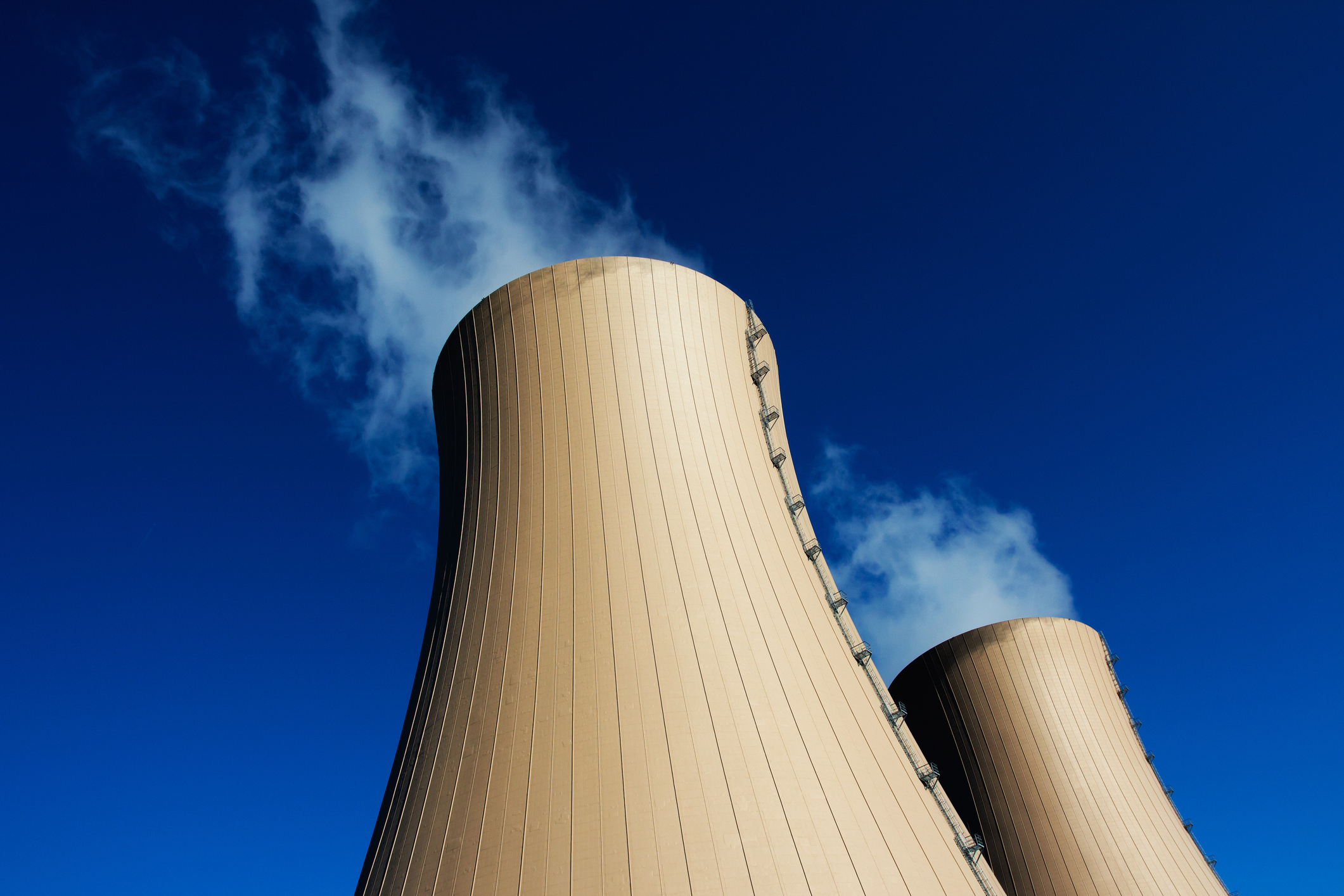
The United States and Saudi Arabia signed an initial civil nuclear cooperation agreement on July 22, laying the legal groundwork for American companies to build reactors in the kingdom as part of a multibillion-dollar energy partnership. A day later, President Trump publicly complicated the agreement, posting on Truth Social that it was “totally subject to” Saudi Arabia joining the Abraham Accords and normalizing ties with Israel, while insisting there would be no enrichment of nuclear material. That condition was not included in the text signed by his own negotiators, and reports suggest it caught parts of the administration’s nuclear team off guard. The kingdom is also not required to adopt the IAEA Additional Protocol that the UAE accepted under its 2009 “gold standard” deal, and reporting suggests the agreement leaves open a potential future path to domestic enrichment.
Why it matters
This is one of the most consequential US-Saudi agreements in years, and the way it has unfolded captures the volatility now embedded in the relationship. For Riyadh, civilian nuclear power is a genuine Vision 2030 priority, freeing up crude for export rather than domestic power generation. But Trump’s decision to link the deal to the Abraham Accords revives the trade-off Saudi Arabia has resisted for years: normalization with Israel without a credible pathway to Palestinian statehood. Coming as the US and Iran remain at war in part over Iran’s enrichment program, a Saudi enrichment pathway with weaker inspection terms than the UAE accepted would send a significant non-proliferation signal across the region.
What to watch
Whether Riyadh accepts an Abraham Accords condition it has repeatedly rejected; whether Congress approves an agreement with weaker inspection terms than the UAE’s; how the deal shapes coordination among GCC states as they navigate nuclear ambitions; and whether the ambiguity around enrichment hardens Iran’s position as the war continues.
Geopolitics and Security
What we are tracking
The UAE is pursuing a careful balancing act with Iran, reopening commercial and diplomatic channels while simultaneously deepening its defense relationships with the United States and Israel, according to a Financial Times report. Maritime trade between Dubai’s ports and Iranian coastal cities has resumed, direct commercial flights have restarted, and Emirati authorities have reportedly cleared the return of around 20,000 UAE-based Iranians displaced during the conflict. President Sheikh Mohamed bin Zayed is said to have assigned the sensitive de-escalation file to three senior officials, including National Security Adviser Sheikh Tahnoon. Separately, Reuters previously reported that Abu Dhabi had allegedly agreed to help unlock billions in frozen Iranian funds in exchange for a halt to attacks, a claim the UAE categorically denied.
According to the Financial Times, the approach reflects Abu Dhabi’s long-standing pragmatism, protecting Dubai’s hub status and vital trade links with Iran while hardening its own security posture and preserving its Western alliances. It positions the UAE as a potential model for managing coexistence with Tehran, engaging economically without abandoning deterrence. The strategy carries real complexity: sustaining commercial ties with Iran while deepening cooperation with the US and Israel requires constant calibration, particularly while the broader US-Iran war continues.
What to watch
Whether the commercial reopening holds if regional tensions escalate again; how the UAE balances its Iran engagement against its deepening US and Israeli defense ties; and whether other Gulf states adopt a similar dual-track approach.
Aviation and Economy
What we are tracking
Renewed US-Iran fighting forced sustained disruption across the Gulf’s aviation hubs through late July. Kuwait International Airport briefly suspended take-offs and landings amid missile and drone threats, while carriers including Emirates, Etihad, flydubai, and Qatar Airways cancelled or rerouted services across Kuwait, Bahrain, Riyadh, and parts of the Dubai and Abu Dhabi networks. Several international airlines suspended Gulf routes altogether, with some disruptions extending into October. Dubai and Sharjah airports remained open throughout, and by July 27 Emirates had begun restoring flights to Kuwait and Bahrain, adding 14 services across the two markets, suggesting a tentative normalization even as short-notice changes continue.
Why it matters
Aviation is one of the Gulf’s most exposed economic sectors and one of its clearest confidence indicators. Dubai in particular runs on connectivity, with Emirates and Dubai International anchoring tourism, trade, and real estate. Sustained cancellations, foreign carriers withdrawing routes for months, and airspace closures across neighboring states all put pressure on the hub model that the UAE and Qatar have spent decades building. The war has already disrupted shipping through the Strait of Hormuz, and the parallel hit to air links shows the conflict is now affecting the Gulf’s day-to-day commercial arteries, not just its oil exports.
What to watch
Whether airspace restrictions ease enough to restore full schedules before the peak Q4 travel season; how prolonged disruption weighs on Dubai’s tourism-dependent economy; and whether extended foreign airline suspensions point to a deeper confidence problem for the Gulf as a global transit hub.
Investment and Gaming
What we are tracking
The Public Investment Fund’s $55 billion take-private of Electronic Arts, the largest leveraged buyout in history, cleared an important hurdle on July 23, when the European Commission approved the deal under EU merger rules with no competition concerns. The consortium of PIF, Silver Lake, and Jared Kushner’s Affinity Partners, first announced in September 2025, still faces a separate and more demanding EU review under the Foreign Subsidies Regulation, expected to conclude around July 30, as well as US clearance from the Committee on Foreign Investment in the United States (CFIUS). If completed, PIF would become EA’s majority owner, with Silver Lake taking a significant minority stake and Affinity holding roughly 5%, anchoring Saudi Arabia’s push to build a global gaming and sports hub around franchises including EA Sports FC.
Why it matters
This deal is the clearest statement yet of the Gulf’s ambition not just to fund the industries it sees shaping the next decade, but to own them, in this case gaming, sport, and entertainment. It also tests how far Western regulators will accommodate sovereign-backed capital: the Foreign Subsidies Regulation was designed specifically to scrutinize state-supported money, and previous Gulf deals, including ADNOC’s acquisition of Covestro, only cleared after lengthy reviews. That the EU approved the merger review even as war continued in the region reinforces a familiar pattern, with Gulf capital deploying at scale on a timeline driven by national strategy rather than by the region’s security backdrop.
What to watch
Whether PIF secures approval without remedies that limit its control or strategic influence; how the deal strengthens Saudi Arabia’s position in global gaming and sports; and whether successful completion gives PIF a stronger platform for further major acquisitions in Western markets.
Trade and Diplomacy
What we are tracking
The UAE and Canada concluded negotiations on a Comprehensive Economic Partnership Agreement (CEPA) on July 24, announced during Emirati Foreign Trade Minister Thani Al Zeyoudi’s visit to Toronto. Completed in just 47 days, it is the fastest trade negotiation in Canada’s history and one of the quickest among the 38 CEPAs the UAE has signed since 2021. Two-way trade reached roughly $4.2 billion in 2025, up 21% year-on-year, and the agreement, which builds on a $50 billion UAE investment commitment announced last November, targets tariff reductions and cooperation across aerospace, agri-food, clean energy, AI, data centers, critical minerals, ports, and LNG. For Ottawa, the deal forms part of a broader push under Prime Minister Mark Carney to diversify trade away from the United States amid ongoing tariff tensions.
Why it matters
For the UAE, the CEPA program is central to its non-oil trade strategy, and bringing a G7 economy into that framework at record speed underscores how important these agreements have become to its goal of doubling the economy by 2031. For Canada, the agreement is also a hedge: with trade frictions rising with Washington, the Carney government is actively seeking Gulf capital and market access as an alternative channel. The sectors prioritized, aerospace, AI, clean energy, and critical minerals, are also where Gulf sovereign capital is most aggressively deploying, making this as much an investment corridor as a trade pact.
What to watch
Whether the agreement is ratified and enters into force on the timeline both sides want; how quickly the $50 billion UAE investment commitment translates into concrete Canadian projects; and whether other Western economies follow Canada’s lead in courting Gulf capital through fast-tracked trade agreements.
Energy and Infrastructure
What we are tracking
Kuwait Petroleum Corporation signed a $16 billion lease-and-leaseback agreement for its crude oil pipeline network on July 25, the largest foreign direct investment in the country’s history. Under “Project Peregrine,” a consortium of Blackstone, Brookfield, and KKR will hold a combined 49% stake in a joint venture covering 13 pipelines spanning roughly 320 kilometres, while Kuwait Oil Company retains 51% and full operational control over a 20.5-year term in exchange for a volume-based tariff. The deal generates about $7.85 billion in upfront proceeds to support KPC’s capital expenditure and its target of four million barrels per day by 2035. It follows similar pipeline fundraisings by Saudi Aramco, ADNOC, and Bahrain’s Bapco.
Why it matters
The transaction is a striking vote of confidence in the Gulf even as the region absorbs the fallout of the war, with KPC’s chief executive framing it as a signal that Kuwait remains an attractive destination for global capital amid a challenging environment. Blackstone’s announcement that it is opening a Dubai office further reinforces that confidence and points to a broader conviction among global investors in the region’s long-term prospects. It also fits a clear regional pattern: Gulf national oil companies are monetising midstream infrastructure to fund production growth and diversification while keeping strategic control. For global private equity, it marks a deepening footprint in Gulf energy assets, with KKR making its first direct investment in Kuwait.
What to watch
Whether the deal closes on schedule given customary regulatory approvals; whether other Gulf producers pursue similar midstream monetization; and whether sustained regional tensions affect the pace of foreign capital inflows into Gulf energy infrastructure.
Related articles
- Why the US-Saudi Nuclear Deal raises alarms
- Trump places new condition on signed Saudi nuclear deal, says country must join Abraham Accords
- Saudi PIF’s $55 billion EA deal approved under EU merger rules
- UAE finalises Cepa with Canada to reduce trade barriers
- Blackstone, Brookfield, KKR ink $16 billion Kuwait oil deal
- The UAE’s bold gambit on Iran