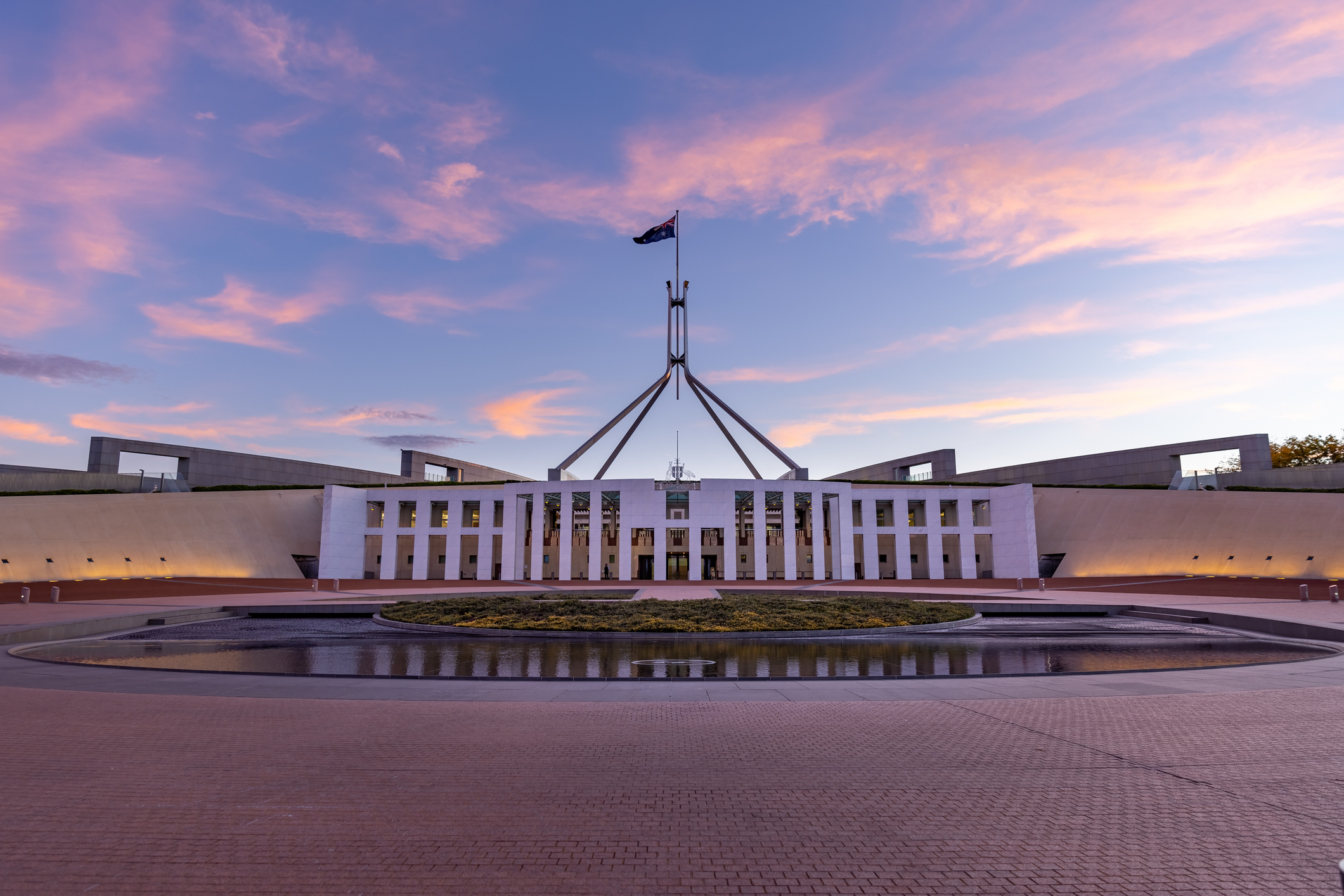

Treasurer Jim Chalmers last night handed down the Federal Budget 2026-27 against one of the most volatile economic and geopolitical backdrops in recent memory.
A deteriorating global outlook, ongoing conflict in the Middle East, higher fuel prices, persistent inflationary pressures and renewed interest rate concerns have all combined to constrain the Government’s room to move. Despite this, Labor has chosen not to deliver a cautious “hold the line” budget. Instead, it has delivered an overtly political and redistributive budget designed to address intergenerational inequality, housing affordability and voter frustration among younger Australians.
The Government’s own forecasts point to fuel price pressure spreading to groceries and everyday goods over coming months, meaning things are likely to get harder before they get easier, with inflation tipped to peak at 5 per cent by mid-year before gradually returning to normal levels by mid-2027 — but only if the conflict does not deepen, because if oil hits $200 a barrel the Government’s own modelling points to inflation above 7 per cent.
The underlying cash deficit sits at $31.5 billion, although stronger-than-expected revenue collections and restrained spending have improved the fiscal position relative to MYEFO. Gross debt is now projected to peak earlier and lower than previously forecast.
But the real story of this Budget is political strategy.
This is a Budget designed to redraw political dividing lines ahead of the next election cycle. Labor is consciously positioning itself as the party of younger workers, first home buyers and aspirational middle-income Australians, while forcing the Coalition into defending tax settings that increasingly benefit older and wealthier asset holders.
The centrepiece reforms include:
• limiting negative gearing to newly constructed properties from July 2027;
• replacing the 50 per cent Capital Gains Tax discount with a model based on inflation indexation and a 30 per cent minimum tax rate;
• introducing a minimum 30 per cent tax rate on discretionary trusts;
• introducing a new $250 Working Australians Tax Offset;
• creating an automatic $1,000 deduction for work-related expenses without receipt substantiation;
• making the $20,000 instant asset write-off permanent for small business; and
• expanding loss carry-back and venture capital incentive arrangements.
Importantly, the Government has attempted to soften the political impact through extensive grandfathering provisions. Existing investment arrangements remain protected, and new-build housing retains preferential treatment under the revised negative gearing framework.
Treasury modelling suggests the housing measures could assist around 75,000 additional Australians into home ownership over the next decade while moderating house price growth rather than driving outright declines. The Government is also betting that the politics of housing affordability now outweigh the politics of protecting investment tax concessions.
From a political perspective, the strategy is relatively clear.
Labor appears increasingly confident that the demographic and electoral centre of gravity is shifting toward younger voters struggling with housing affordability and cost-of-living pressures. The Government is effectively daring the Coalition to oppose measures framed as helping workers and first home buyers, while simultaneously defending arrangements increasingly associated with wealth accumulation and tax minimisation.
That does not mean the strategy is without risk.
The Government has clearly broken a previous commitment not to alter negative gearing and Capital Gains Tax arrangements, creating an obvious line of attack for Opposition Leader Angus Taylor in Thursday night’s Budget Reply. The Coalition will likely focus heavily on sovereign risk, investor confidence, rental market pressures and trust in government commitments.
At the same time, the Budget continues to rely heavily on assumptions around constrained spending growth, particularly within the NDIS, where projected savings of $37.8 billion underpin much of the medium-term fiscal improvement. Those changes will become politically contentious as implementation progresses.
Beyond the headline tax reforms, the Budget also included several important structural and business-focused measures that received less public attention overnight.
A substantial productivity and deregulation package aims to reduce compliance costs by more than $10 billion annually, including:
• raising large proprietary company reporting thresholds;
• reducing financial and regulatory compliance obligations;
• abolishing almost 500 additional nuisance tariffs;
• investing in digital business registry reform and ASIC modernisation; and
• progressing National Competition Policy and “single national market” reforms.
These measures reflect growing recognition within government and business that Australia’s productivity performance has materially deteriorated and that regulatory burden is increasingly constraining investment and economic growth.
However, while the Budget contains a large number of targeted initiatives, it does not yet fundamentally change Australia’s weak productivity outlook. Treasury forecasts still imply trend productivity growth remains subdued and the economy continues to operate within relatively low long-term growth settings.
In practical terms, the Budget is less about transforming the economy and more about redistributing opportunity, easing political pressure points and attempting to reset the Government’s political positioning before the next election.
The broader question now is whether the Coalition chooses to fight this Budget primarily on economic management grounds, or whether it walks directly into the generational and housing affordability framing Labor appears determined to create.
Either way, this Budget marks one of the most politically consequential shifts in Australian tax and housing policy in decades.